تئاتر

تئاتر

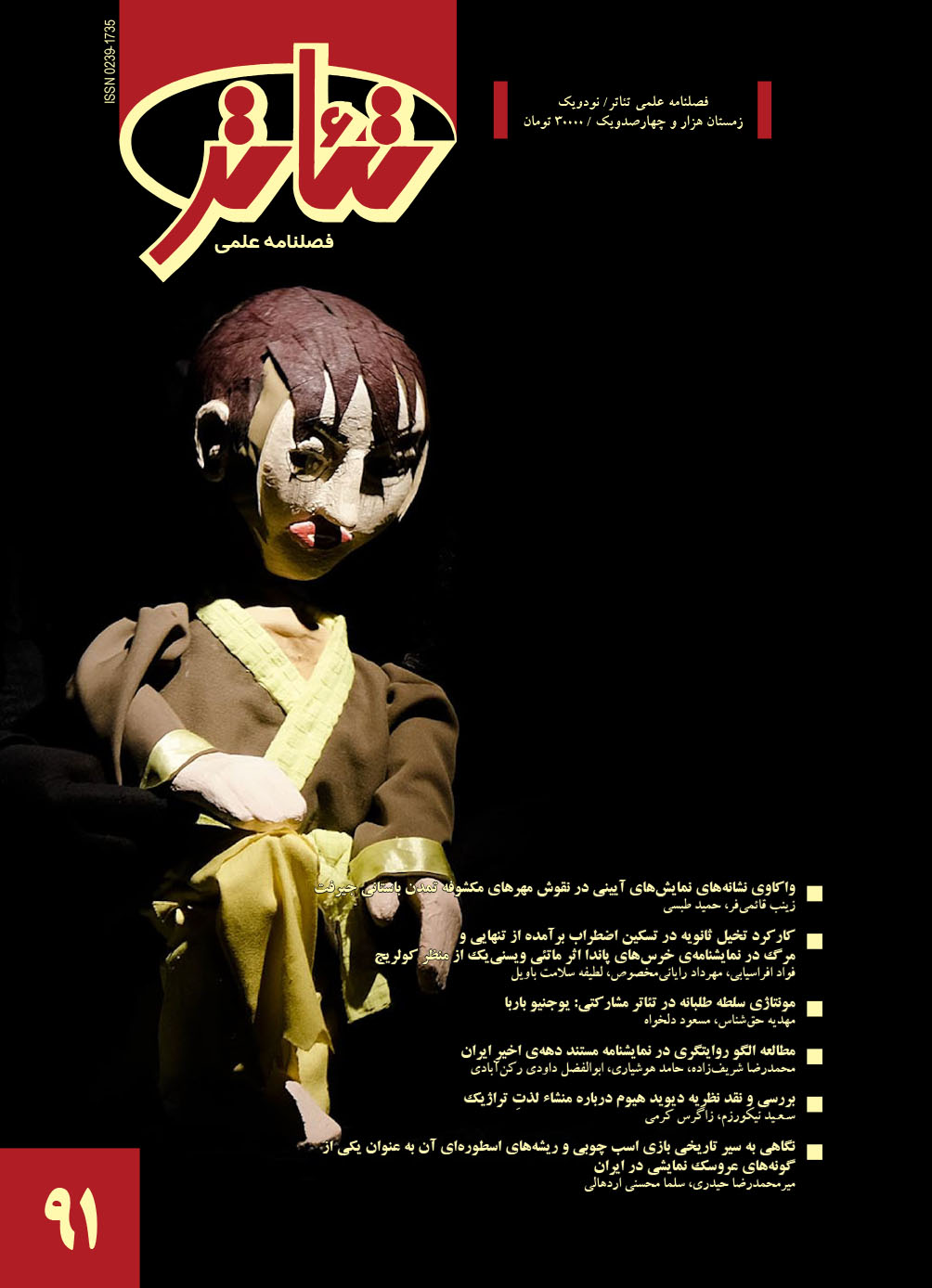
کارکرد تخیل ثانویه در تسکین اضطراب برآمده از تنهایی و مرگ در نمایشنامه‌‌ی خرس‌های پاندا اثر ماتئی‌ ویسنی‌یک از منظر کولریج

نوع مقاله : مقاله پژوهشی

نویسندگان
1 کارشناس‌ارشد ادبیات‌نمایشی، واحد تهران مرکزی دانشگاه آزاد اسلامی ، تهران، ایران
2 استادیار گروه نمایش، واحد تهران مرکزی دانشگاه آزاد اسلامی، تهران، ایران
3 استادیار گروه ادبیات فارسی، واحد تهران مرکزی، دانشگاه آزاد اسلامی، تهران، ایران
چکیده
این مقاله کوششی است در تبیین و ارایه‌ی مفهوم «تخیل ثانویه» براساس آرای کولریج و بررسی تاثیر آن در اضطراب برآمده از تنهایی و مرگ در نمایشنامه‌ی داستان خرس‌های پاندا به روایت یک ساکسیفونیست که دوستی در فرانکفورت دارد اثر ماتئی ویسنی‌یک. مسیر اصلی این مقاله، معطوف است به درک مفهوم «تخیل ثانویه» مبتنی بر آرای سیموئل تیلور کولریج و درک تفاوت معنایی و مفهومی آن با «تخیل اولیه» و «خیال» به منظور اثبات این نکته که «تخیل ثانویه» نقش کلیدی و مهمی در تسکین اضطراب‌ برآمده از «تنهایی» و «مرگ» در شخصیت‌های نمایشنامه‌ی داستان خرس‌های پاندا به روایت یک ساکسیفونیست که دوستی در فرانکفورت دارد ایفا می‌کند. این پژوهش بر چگونگی عملکرد «تخیل ثانویه» به‌عنوان ساز و کاری دفاعی در نمایشنامه‌ی انتخابی معطوف است، بنابراین پرسش بنیادین این پژوهش عبارت است از:‌ مطابق رویکرد کولریج، چرا و چگونه تخیل ثانویه می‌تواند اضطراب برآمده از تنهایی و مرگ شخصیت‌ها در نمایشنامه‌ی‌ مورد بحث را برطرف نماید؟ این مقاله که به صورت تحلیل محتوای کیفی به نگارش درآمده به همراه ارایه‌ی جدول و نمودار به صورت مستدل نشان می‌دهد چگونه شخصیت‌های نمایشنامه‌ی داستان خرس‌های پاندا به روایت یک ساکسیفونیست که دوستی در فرانکفورت دارد با پناه بردن به «تخیل ثانویه» با آفرینش جهانی ساخته و پرداخته‌ی ذهن‌شان، اضطراب‌های تنهایی و مرگ خود را از پنج مسیر مختلف روساختی و ژرف‌ساختی تسکین می‌دهند.
کلیدواژه‌ها

عنوان مقاله English

The function of secondary imagination in alleviating the anxiety arising from loneliness and death in the play ‘Panda Bears’ by Matei Vișniec from Coleridge's point of view

نویسندگان English

Foad Afrasiyabi 1
Mehrdad Rayanimakhsos 2
Latifeh Salamat Bavil 3
1 MA in dramatic literature, Central Tehran branch of Islamic Azad University, Tehran, Iran
2 Assistant Professor of Drama Department, Central Tehran branch of Islamic Azad University, Tehran, Iran
3 Assistant Professor, Department of Persian Literature, Central Tehran Branch, Islamic Azad University, Tehran, Iran
چکیده English

This article is an attempt to explain the definition of “secondary imagination” based on Samuel Taylor Coleridge’s discourse and study the effect of it on the anxiety arising from Loneliness and Death in “The Story of the Panda Bears Told by a Saxophonist Who Has a Girlfriend in Frankfurt” play by “Matei Vișniec. The main direction of article is the perception of “secondary imagination” concept based on the discourse of Coleridge and the perception of the conceptual and semantic difference of secondary imagination with the primary imagination and fantasy in order to prove this point that the secondary imagination has a key role in alleviation of anxiety caused by Loneliness and Death inside the Characters of Matei Vișniec’s work. This article also has studied how secondary imagination works as a defense mechanism in selected plays that helps us to cope with the anxiety caused by loneliness and death from the perspective of existential psychologists and it is mentioned that how the secondary imagination takes the place of defense mechanisms in this play. The Result of this study answers this fundamental question that based on Samuel Taylor Coleridge’s discourse, why and how the secondary imagination can eliminate the anxiety arising from Loneliness and Death inside the Characters? This essay that was written in the form of “qualitative –Analytical” along with charts and tables reasonably shows that how the Characters of Matei Vișniec’s play use the secondary imagination that leads to Creation a new world in their mind with a new Cause and effect relationships, relieve their anxiety of loneliness and death.

کلیدواژه‌ها English

Secondary imagination
Death
Matei Vișniec
Play
The Story of the Panda Bears Told by a Saxophonist Who Has a Girlfriend in Frankfurt

  • تاریخ دریافت 11 آبان 1401
  • تاریخ بازنگری 20 بهمن 1401
  • تاریخ پذیرش 24 بهمن 1401