تئاتر

تئاتر

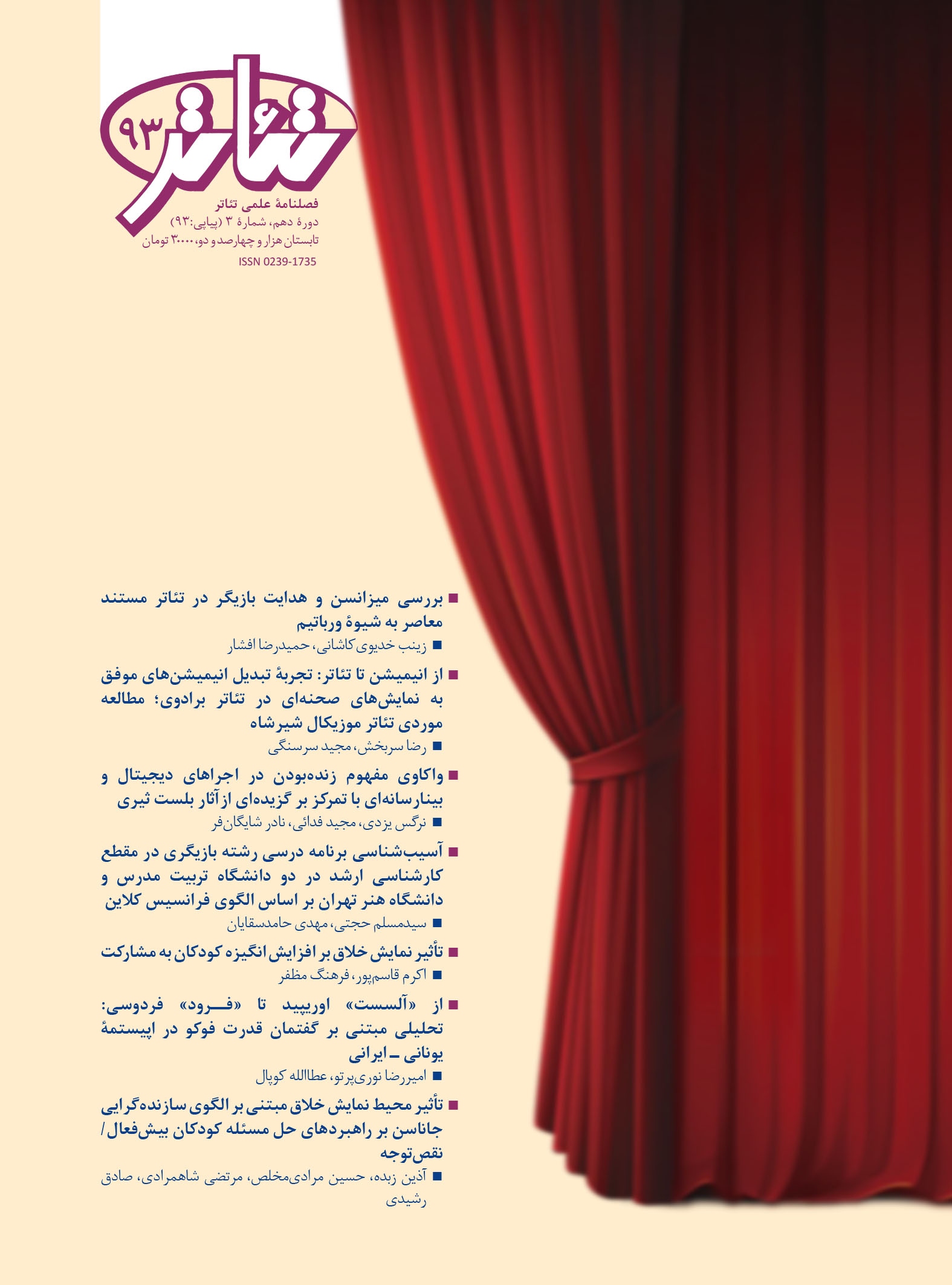
تأثیر محیط نمایش خلاق مبتنی بر الگوی سازنده‌گرایی جاناسن بر راهبردهای حل مسئله کودکان بیش‌فعال /نقص‌توجه

نوع مقاله : مقاله پژوهشی

نویسندگان
1 کارشناس ارشد علوم تربیتی، دانشگاه آزاد اسلامی واحد علوم و تحقیقات، تهران، ایران.
2 دانشیار گروه علوم تربیتی، دانشکده علوم انسانی، دانشگاه بوعلی سینا، همدان، ایران .
3 استادیار گروه علوم تربیتی، دانشکده علوم انسانی، دانشگاه سید جمال‌الدین اسدآبادی، همدان، ایران.
4 استادیار گروه آموزش هنر، دانشگاه فرهنگیان، تهران، ایران.
چکیده
کودکان بیشفعال دارای نقص دارای مشکلاتی هستند و هدف پژوهش حاضر بررسی تأثیر روش نمایش خلاق بر راهبردهای حل مسئله کودکان بیشفعال/ نقصتوجه است. پژوهش حاضر ازنظر هدف کاربردی و ازنظر ماهیت و روش، شبه آزمایشی با طرح پیشآزمون- پسآزمون و گروه کنترل بود. جامعه آماری شامل کودکان بیشفعال/ نقصتوجه مدارس پیشدبستانی آموزشوپرورش شهر بهارستان در منطقۀ یک در سال تحصیلی 2019 بود. با روش نمونهگیری، هدفمند 30 کودک بیشفعال/نقصتوجه انتخابشده و بهصورت تصادفی به دو گروه کنترل و آزمایش تقسیم شدند. گروه کنترل(روش سخنرانی) و گروه آزمایش (روش نمایش خلاق مبتنی بر الگوی سازندهگرایی جاناسن) مفهوم صرف جویی و مصرف بهینه را آموزش دیدند. ابزار جمعآوری دادهها، پرسشنامۀ استاندارد راهبردهای حل مسئلۀ کسیدی، پرسشنامۀ اختلال بیشفعالی/ نقصتوجه کانرز و برنامۀ آموزشی در محیط نمایش خلاق مبتنی بر الگوی سازندهگرایی جاناسن در کلاس بود. روایی پرسشنامهها و برنامۀ آموزشی توسط متخصصان روانشناسی تربیتی به روش روایی محتوایی تائید شد و پایایی پرسشنامهها به روش آلفای کرونباخ به ترتیب 75/0 و 79/0 محاسبه گردید. نتایج نشان داد، بهکارگیری نمایش خلاق مبتنی بر الگوی سازندهگرایی جاناسن موجب افزایش راهبردهای حل مسئله، شیوههای سازنده (شیوه خلاقیت، اعتماد و گرایش) و شیوههای غیر سازنده (درماندگی، شیوه کنترل و اجتناب) کودکان بیشفعال (نقصتوجه) دانشآموزان پیشدبستانی میشود. محیط پویای نمایش خلاق مبتنی بر الگوی سازندهگرایی جاناسن اثر مثبت بر راهبردهای حل مسئله کودکان بیشفعال/ نقص دارد و میتوان از این محیط یادگیری تأثیرگذار برای ارتقاء مهارتهای حل مسئله در کودکان بیشفعال استفاده کرد.
کلیدواژه‌ها

عنوان مقاله English

The Effect of a Creative Drama Environment Based on Janasen’s Constructivism Model on Problem-solving Strategies of ADHD Children

نویسندگان English

Azin Zobdeh 1
Hossein Moradimokhles 2
Morteza Shahmoradi 3
Sadeq Rashidi 4
1 M.A. of Instructional technology, Department of Educational Science, Islamic Azad University Science and Research Branch, Tehran, Iran.
2 Associate Professor, Department of Educational Sciences, Faculty of Humanities, Bu-Ali Sina University, Hamedan, Iran.
3 Assistant Professor, Department of Education, Human Sciences Faculty, Seyyed Jamaleddin Asadabadi University, Hamedan, Iran.
4 Assistant Professor, Department of art education. Farhangian University. Tehran, Iran.
چکیده English

Children with attention-deficit/hyperactivity disorder (ADHD) have problems, and the purpose of this study is to investigate the effect of the creative drama method on the problem-solving strategies of children with ADHD. The present research was applied research in terms of purpose, nature, and method; it was quasi-experimental with a pre-test-post-test design and a control group. The statistical population included preschool children with ADHD from Baharestan City in Region 1 in the academic year of 2019. With the sampling method, 30 children with ADHD were selected and randomly divided into two control and experimental groups. The control group (lecture method) and the experimental group (creative drama method based on Janasen’s constructivism model) were taught the concept of saving and optimal consumption. The data collection tool was Cassidy’s standard problem-solving strategies questionnaire, Connors’ ADHD questionnaire, and the educational program in the creative drama environment based on Janasen’s constructivism model in the classroom. The validity of the questionnaires and educational program was confirmed by educational psychology experts using the content validity method, and the reliability of the questionnaires was calculated using Cronbach’s alpha method as 0.75 and 0.79, respectively. The results showed that the use of creative drama based on Janasen’s constructivism model increases problem-solving strategies, constructive ways (creativity, trust, and tendency), and non-constructive ways (helplessness, control, and avoidance) of hyperactive children (attention deficit) of preschool students. The dynamic creative drama environment based on Janasen’s constructivism model has a positive effect on the problem-solving strategies of ADHD children, and this effective learning environment can be used to improve problem-solving skills in hyperactive children.

کلیدواژه‌ها English

Creative drama
Janasen’s Constructivism Model
Problem-solving Strategies
Children with ADHD

  • تاریخ دریافت 03 بهمن 1401
  • تاریخ بازنگری 16 تیر 1402
  • تاریخ پذیرش 01 مرداد 1402